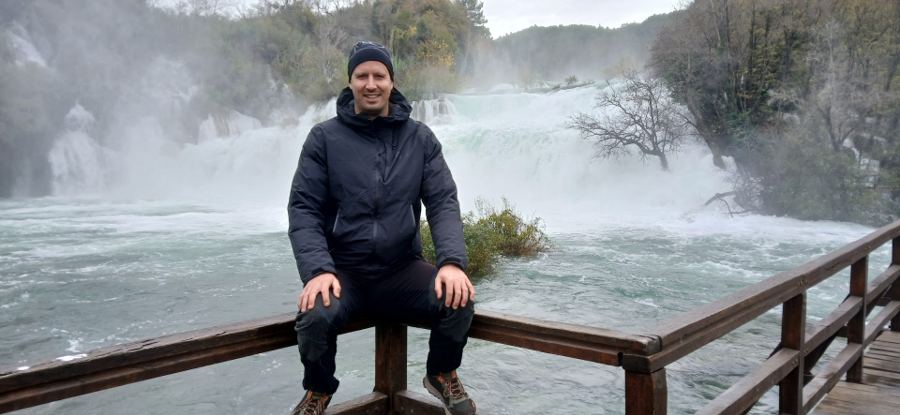
The river Krka falls over a staircase of travertine barriers on its way to the sea. Skradinski buk, the largest of its waterfalls, is loudest in spring and late autumn, when the whole valley is wrapped in spray.
Krka is a natural wonder, but it is also a working river with a long human history. Watermills ground grain here for centuries, and in 1895 a hydroelectric plant on the Krka sent alternating current to Šibenik, one of the first systems of its kind in the world.
We walk the boardwalks around Skradinski buk at a relaxed pace, look at the old mills and the village life around them, and finish the day in Šibenik, a stone town with a cathedral built without a single brick.
Highlights
- Skradinski buk and the boardwalk loop
- The old watermills and the story of early electricity
- Lunch in the riverside town of Skradin
- The cathedral of St James in Šibenik
Itinerary
Times are approximate. I adjust the day to your pace, the season and the crowds.
- 08:00Pickup
From your accommodation, north along the coast past Trogir and Primošten.
- 09:30Skradin and the river
From the little town of Skradin we take the park boat up the river to the falls (in season; otherwise we enter at Lozovac).
- 10:00Skradinski buk
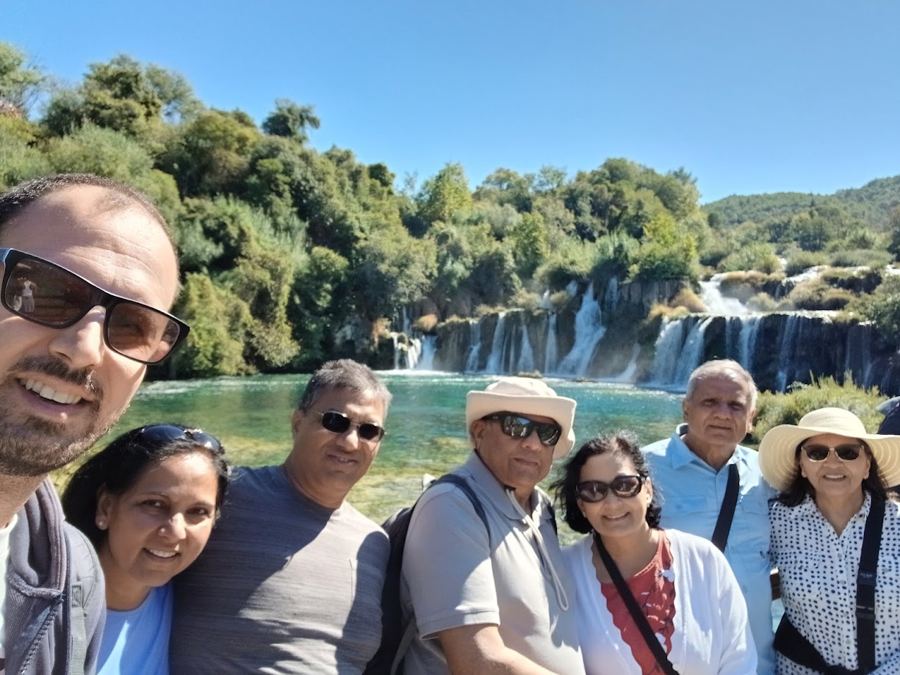
The boardwalk loop around the largest waterfall of the Krka, through forest, over pools and past seventeen travertine steps of falling water.
- 11:00Mills and the first power plant
The restored watermills and the story of the Jaruga hydroelectric plant of 1895, which lit the streets of Šibenik.
- 12:30Lunch in Skradin
A riverside lunch in Skradin (not included), known for its risotto and seafood.
- 14:15Šibenik
The cathedral of St James, a UNESCO site built entirely of stone, and the old town lanes up to the fortress of St Michael.
- 16:00Return
Drive back along the coast, arriving around 17:30. Park tickets are not included.
Gallery

More day trips
All day trips ›You might also like