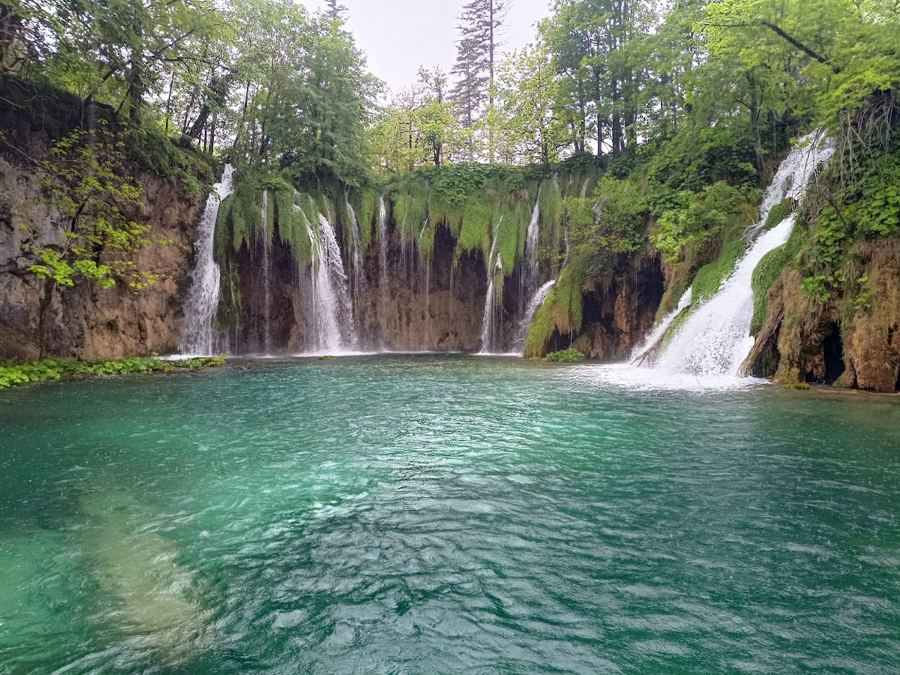
Plitvice is a chain of sixteen lakes linked by waterfalls, protected as one of the first UNESCO World Heritage sites in the world, in 1979. An early start lets us walk the boardwalks before the crowds arrive.
The lakes are still being built. Mosses and algae trap calcium carbonate from the water and slowly grow the travertine dams that hold each lake in place, so the landscape you see is alive and changing.
The area also has a human story: it lay on the old Military Frontier between the Habsburg and Ottoman worlds, and in 1991 the first casualties of the Homeland War fell here. I tell both stories as we walk from the Lower Lakes to the Upper Lakes.
Highlights
- Upper and Lower Lakes on the boardwalks
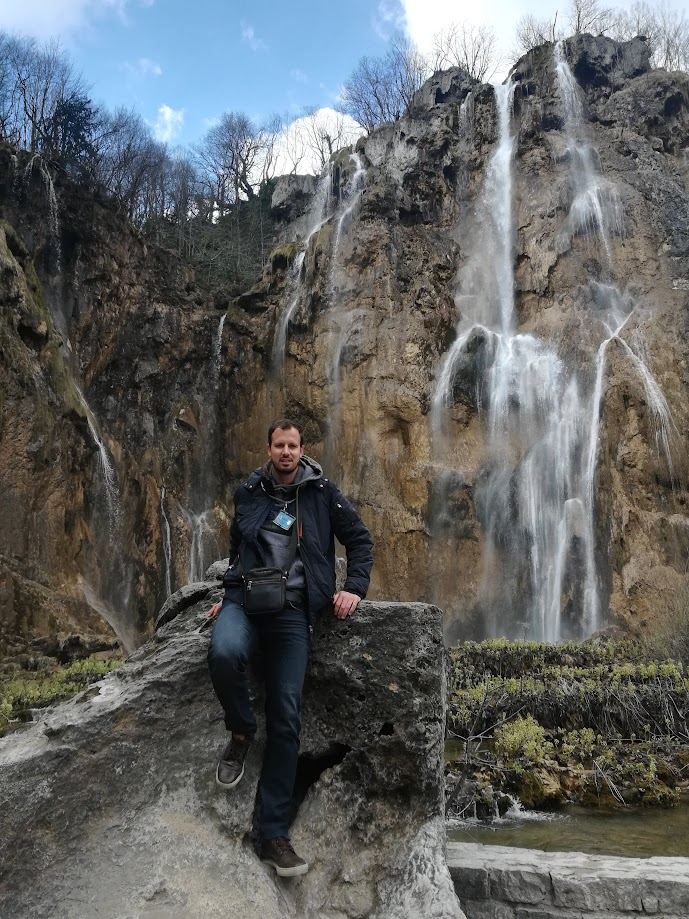
- Veliki slap, the tallest waterfall in Croatia
- How the travertine lakes are formed
- The Military Frontier and the history of the region
Itinerary
Times are approximate. I adjust the day to your pace, the season and the crowds.
- 06:30Pickup
An early start from your accommodation and a drive north through the Dalmatian hinterland and the Lika plateau.
- 09:00The great viewpoint
Our first look over the Lower Lakes and Veliki slap from the top of the canyon.
- 09:30Lower Lakes and Veliki slap
Down the canyon on the boardwalks to the foot of the 78-metre Veliki slap, the tallest waterfall in Croatia, and past the Šupljara cave.
- 11:15Boat across Lake Kozjak
An electric boat across the largest of the lakes, with time for a coffee on the shore.
- 11:45Upper Lakes
The quietest part of the park: Galovac, Gradinsko and the cascades of Veliki prštavac, with the story of how travertine is born.
- 13:30Panoramic train and lunch
The park train back to the entrance, then lunch at a traditional Lika restaurant (not included): lamb, trout and local cheese.
- 15:00Return
Drive back to the coast, arriving around 18:00. Park tickets are not included.
Gallery
More day trips
All day trips ›You might also like